Build vs. buy: how to launch a ride-hailing and delivery app in 2026
A practical framework for founders choosing between building a taxi and food delivery platform from scratch, licensing source code, or renting a SaaS — and what each path really costs you.
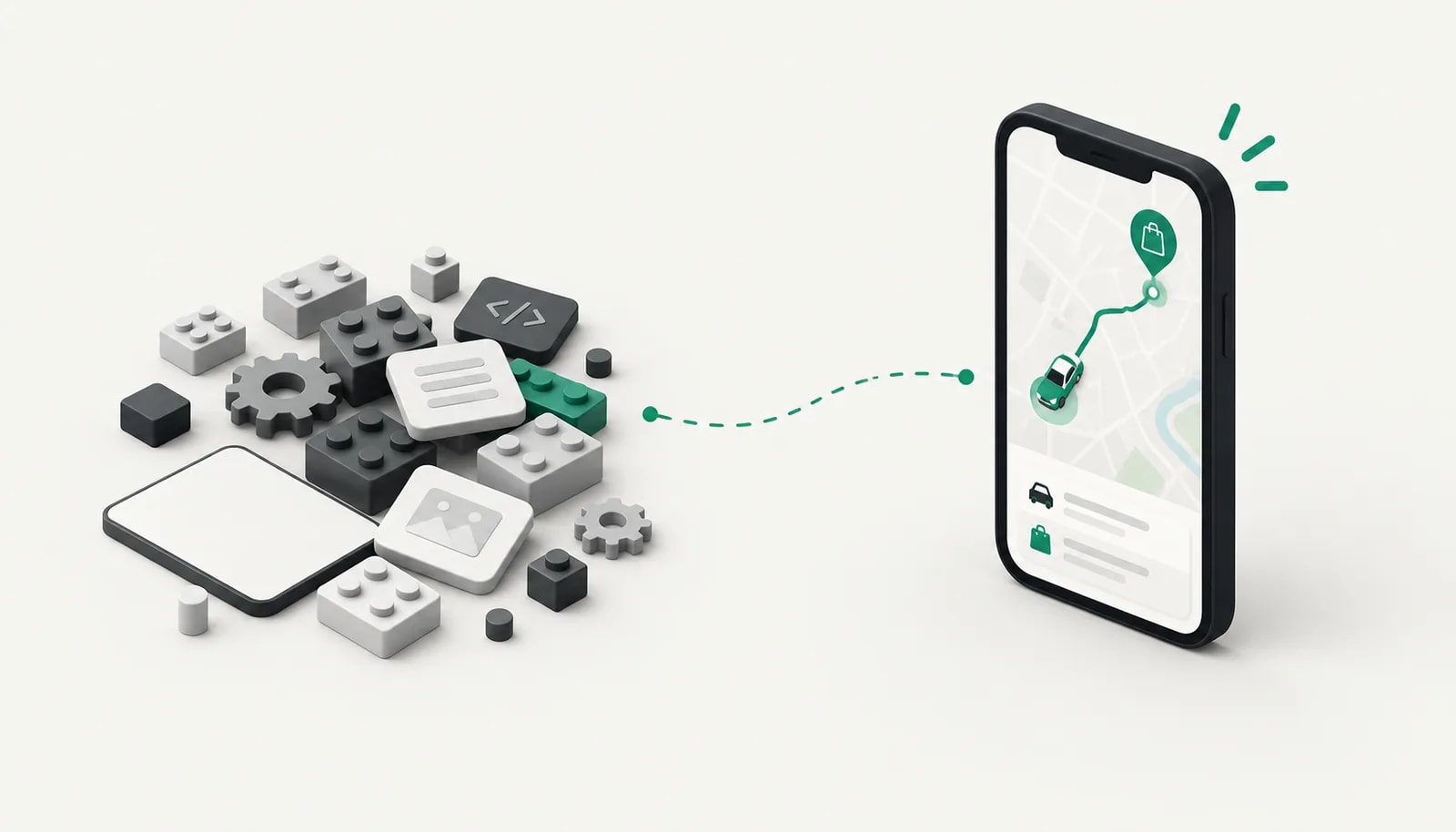
Every founder who wants to launch a local Uber, Careem or Deliveroo alternative hits the same fork early: build it, buy the source code, or rent a platform? The answer decides your runway, your time to market and how much of the product you actually own.
This guide lays out the three paths honestly — including when not to buy a template like ours.
What "a ride-hailing app" actually means#
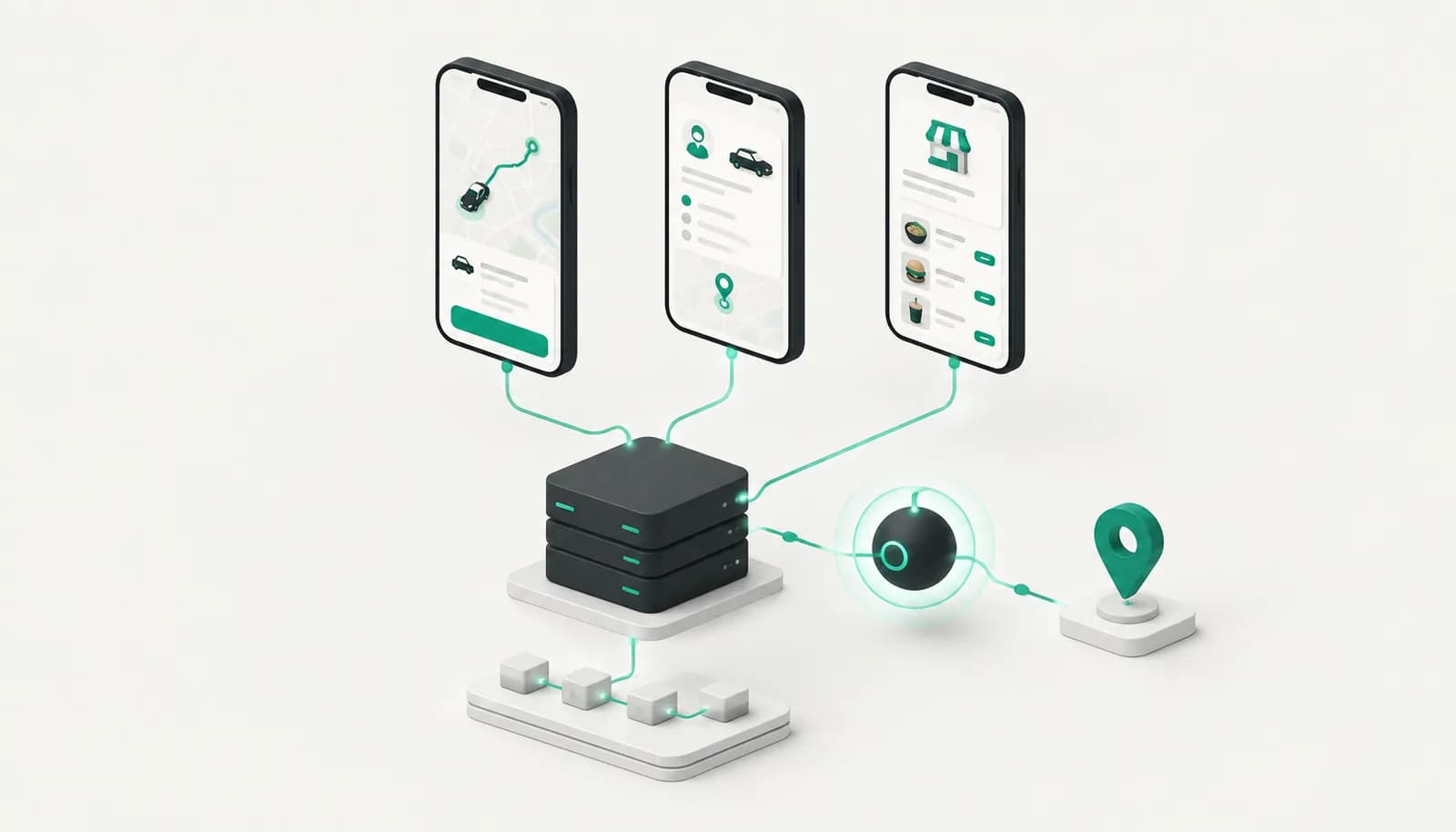
A single app in the store is the tip of the iceberg. A working mobility or delivery business needs at least:
- A rider app — booking, fare estimate, live tracking, payments, ratings.
- A driver app — online/offline state, request queue, navigation hand-off, earnings.
- A partner app if you do food — menus, order acceptance, opening hours.
- An admin panel — regions, pricing rules, vehicle types, promotions, payouts, refunds.
- A support tool — so tickets don't live in someone's WhatsApp.
- Real-time infrastructure — location streaming, push notifications, dispatch.
When people compare quotes, they often compare one of these against all of them. Write the full list down before you talk to anyone.
Path 1: Build from scratch#
Choose this when your core advantage is the software — a novel dispatch model, a regulated market with unusual rules, or deep integration with an existing enterprise system.
What you get: total control and an architecture shaped exactly around your idea.
What it costs:
- Time. Five coordinated products take a real team many months to reach store-ready quality, and longer to get the edge cases right (cancellations mid-trip, GPS drift, payment retries, refunds).
- Focus. Your first year goes into rebuilding solved problems — wallets, promo codes, surge rules — instead of acquiring drivers and riders.
- Risk. You find out whether the market wants you only after the money is spent.
Path 2: Rent a SaaS platform#
Choose this when you need to test demand in one city in weeks, and you're comfortable not owning the code.
SaaS gets you live fastest and handles hosting. The trade-offs show up later:
- Per-order or monthly fees grow with your success.
- Your roadmap is their roadmap. If you need a feature they won't build, you wait.
- Lock-in. Data exports exist, but moving riders, drivers and history to a new stack is painful.
Path 3: License the source code#
Choose this when you want to launch quickly and own the product long-term.
You buy a complete, working platform once — apps, admin and backend — then rebrand, host and extend it yourself (or with a partner). This is the model behind RapidX.
What to check before you buy any source-code product:
| Question | Why it matters |
|---|---|
| Is there a live demo of every app and panel? | Screenshots hide broken flows. Click through a real booking. |
| Is it full source, not obfuscated or encrypted? | You can't extend what you can't read. |
| What's the stack? | Hire-ability matters. Flutter + Laravel developers are easy to find. |
| How are updates delivered? | You want fixes and framework upgrades without re-buying. |
| What does the license allow? | Single product vs. SaaS/multi-tenant use are different licenses. |
| Is installation help available? | Deployment is where most self-launches stall. |
A simple way to decide#
Ask three questions in order:
- Is the software itself my moat? If yes, build.
- Do I need to validate demand before committing capital? If yes, rent — but plan your exit.
- Otherwise, license the source code and spend your budget on supply (drivers, restaurants) and demand (riders).
Most operators we talk to land on option three, because the hard part of a mobility business isn't the booking screen — it's the marketplace. Owning the code means you can adapt it as you learn, without asking permission.
Where to go from here#
- Click through the RapidX live demo — rider, driver and restaurant APKs, the admin panel and the support desk.
- Read how RapidX is built if you're evaluating the stack.
- If you'd rather not deploy it yourself, see our installation plans.
Launching a ride or delivery app?
RapidX ships rider, driver and restaurant apps plus a Laravel admin — from $49.

Comments
Loading comments…
Be kind and stay on topic. Comments that are spam or abusive are removed. Privacy